
We Test Notes
We writes notes
Introduction
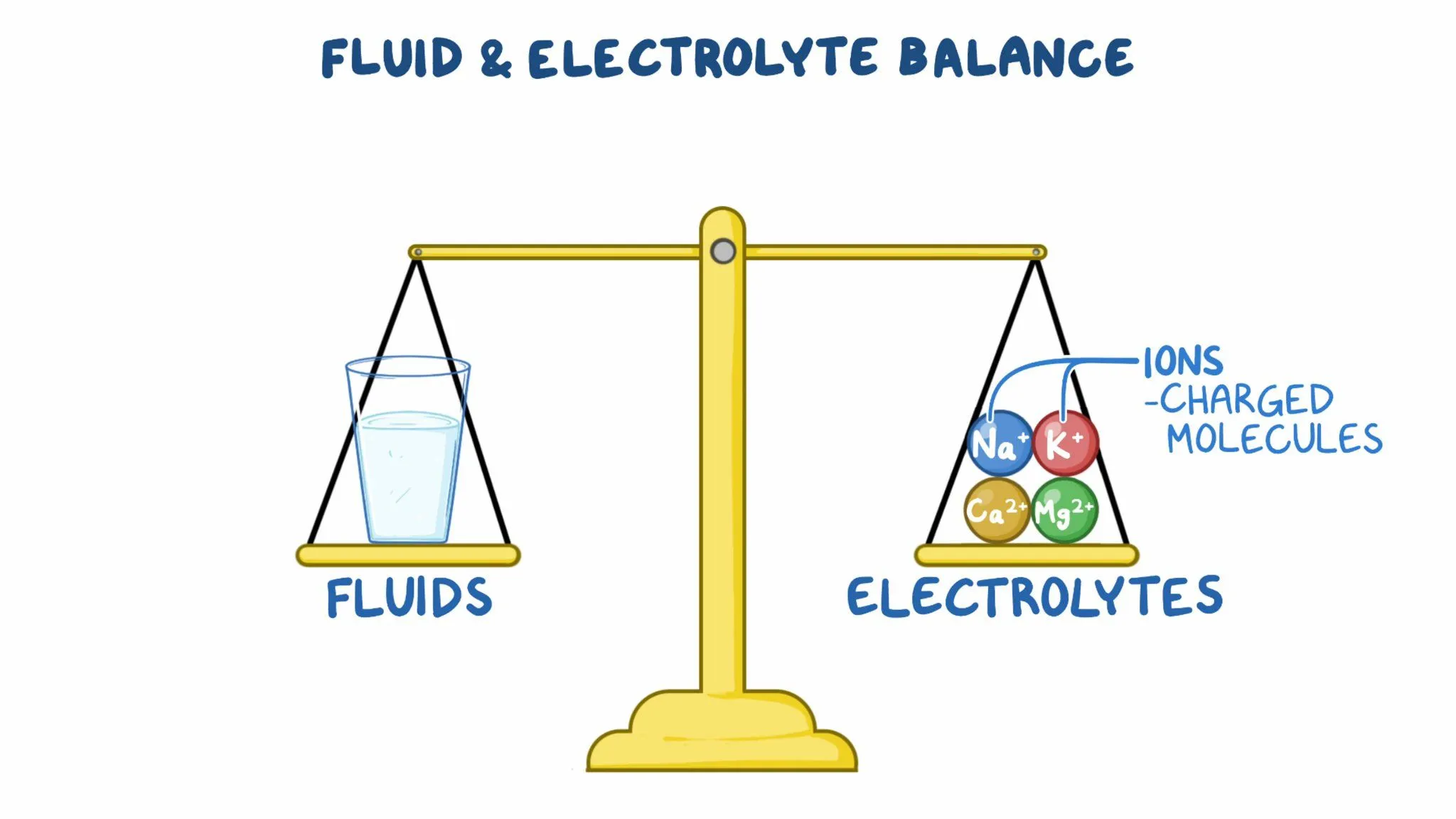
BODY FLUID
Body fluids refers to all normal liquids present in the human body. Body fluids make up 50-60% of body mass of an average man.
The body fluids perform various functions which include transport of nutrients, waste removal, maintain cellular function, and regulate body temperature.
ELECTROLYTE
Electrolyte refers to charged particles that exist normally in human body. Electrolytes are minerals that become either positively or negatively charged when dissolved in water or fluids of the body.
Electrolytes perform functions such as muscle contraction, control of nerve impulses, hydration of the body, and acid-base balance.
Fluid Compartments
Click here to Practice Related Exams 📖
Total Body Water (TBW) refers to the total fluid volume found in the body. The fluid contribute to the overall weight of a person. For adult male, the fluid comprises of 60 % of total body weight while for adult female, the fluid form 50-55 % of the total body weight. The fluids exist in various compartments within the body.
Compartments. The Total Body Water is distributed throughout the body, and are located in two major compartments.
Intracellular Fluid Compartment (ICF)
Which refers to all fluids located inside the cells and form 2/3 of the Total Body Water of the normal average person.
Extracellular Fluid Compartment (EFC)
Refers to the body fluids located outside the cells. The ECF comprises of intravascular (plasma), interstitial, and transcellular (CSF, synovial, pleural) fluids and forms 1/3 of the total body water volume.
Key Electrolytes & Reference Ranges
Electrolyte
Normal Range
Key Function
Sodium (Na⁺)
135–145 mEq/L
Fluid balance, nerve impulses
Potassium (K⁺)
3.5–5.0 mEq/L
Cardiac & muscle function
Calcium (Ca²⁺)
8.6–10.2 mg/dL
Bones, clotting, muscles
Magnesium (Mg²⁺)
1.5–2.5 mEq/L
Neuromuscular function
Chloride (Cl⁻)
98–106 mEq/L
Acid–base balance
Phosphate (PO₄³⁻)
2.5–4.5 mg/dL
Energy (ATP), bones
Fluid Regulation & Homeostasis
More Practice Questions
Fluid regulation help in maintain normal body fluid balance (homeostasis). There are various hormones and body organs that help in fluid regulations.
Key body organs that are involve are; kidneys, hypothalamus, and endocrine system. Kidney is the primary organ for maintaining homeostasis.
Major Regulators
Major hormones that re involve include; Anti-Diuretic Hormone (ADH), Aldosterone, Atrial Natriuretic Peptide (ANP), and Renin- Angiotensin-Aldosterone System (RAAS).
Each of these hormones play a specific function in maintenance of normal body fluid balance. ADH helps retain water, Aldosterone helps in retaining of sodium ion and water, and RAAS helps in sodium ion/ water retention balance.
Thirst Mechanism
Refers to an homeostatic process in which the hypothalamus detect high blood osmolality and send signals to specialized sensory organs called subcortical organs that help in triggering the desire to drink water.
Edema & Dehydration
Oedema
Oedema is a condition in which the body tissues swells because of the excess fluid in interstitial spaces. The condition is characterized by swelling of feet, legs or hands. If not control quickly, oedema can lead to heart failure, renal disease, liver disease, and inflammation.
Signs
The signs and symptoms of Oedema condition include;
Pitting/non-pitting swelling
Weight gain
Decreased urine output
Prevention
Lowering salt intake
Dehydration
Dehydration is a condition of body fluid volume deficit. The condition occurs when the body fluid output is more than fluid intake. Under dehydration, the body does not have enough vital fluids including water.
Signs
Dry mucous membranes
Poor skin turgor
Tachycardia
Hypotension
Concentrated urine
Control
The main control involve drinking of more water to increase fluid intake volume.
Electrolyte Imbalances (HYPER & HYPO)
The abnormal level of minerals like sodium, potassium, calcium, and magnesium refers to as electrolyte imbalance. The electrolyte imbalance can either exist in excess (HYPER) or in little quantity (HYPO) leading to various conditions within the body depending on the specific mineral involve.
Sodium
Hyponatremia;
Low sodium in the body fluid (blood) is referred to as hyponatremia. It is a condition in which sodium level is below normal range of 135–145 mEq/L.
Signs
Headache
Confusion
Seizures
Hypernatremia;
Likewise, high sodium in the body above the normal range of 135–145 mEq/L is known as hypernatremia. The condition usually occurs due to dehydration or excessive fluid output.
Sign
Thirst
Dry skin
Agitation
Prevention
Balancing of fluid intake and dietary intake of food with sodium at a recommended amount.
Potassium
Hypokalemia:
Refers to the insufficient blood potassium levels below the normal range 3.5–5.0 mEq/L.
Sign
Muscle weakness
Dysrhythmias
Ileus
Hyperkalemia:
Refers to excess potassium in the body fluid above the normal range 3.5–5.0 mEq/L.
Sign
Peaked T waves
Muscle paralysis
Cardiac arrest
Calcium
Hypocalcemia:
Hypocalcemia is a condition where there is low calcium level below the normal range (8.6–10.2 mg/dL) in the blood.
Signs
Tetany
Chvostek
Trousseau
Hypercalcemia:
It is a condition characterized by excess calcium in the blood above normal range (8.6–10.2 mg/dL).
Signs
Stones, bones,
groans, and
psychiatric overtones
Magnesium
Hypomagnesemia:
Low magnesium level below the normal range 1.5–2.5 mEq/L in the blood is known as hypomagnesemia.
Signs and Symptoms
Tremors
Seizures
Hypomagnesemia:
Refers to the condition where there is high magnesium level above the normal range1.5–2.5 mEq/L in the blood.
Signs
Hypotension
Respiratory depression
Medical & Nursing Management
Medical Management
Medical fluid management involve maintaining electrolyte stability within the body. Fluid maintenance help to maintain homeostasis level, for maximum body organ functions. Some of the medical management of body fluids include;
IV fluids (NS, LR, D5W,)
Most commonly IV fluids used for fluid resuscitation and maintenance include Normal Saline (NS) (for dehydration, hemorrhage, and raising blood pressure), Lactated Ringer’s (LR) (for fluid replacement after surgical operations or severe fluid loses through vomiting or diarrhea), and 5% Dextrose in Water (D5W) (use to treat hypernatremia cases). These IV fluids are all isotonic solutions.
Electrolyte replacement or restriction
Electrolyte replacement is recommended in HYPO conditions. The replacement can be achieved through oral supplements such as tablets or drinks, or through intravenous means in which appropriate IV electrolytes are administered including potassium and calcium.
Diuretics (loop, thiazide)
Diuretics are medications that help in removal of excess water or sodium ion from the body. Diuretics always target the kidneys since it is the main organ that help in sodium and water elimination when in excess in the body fluid. The removal of excess water or sodium help in maintaining body homeostasis. The main known diuretics are loop and thiazide.
Dialysis (severe imbalance)
Dialysis is only used in severe cases where the body electrolyte cannot be maintained due to kidney inability to perform filtration function. Dialysis involve using artificial devices to help in blood filtration, by removing excess water or minerals salts.
Nursing Management
Various methods can be used as a nursing management practice to help maintain the body fluid at a normal range. Some of the available interventions methods include and are not limited to;
Strict intake & output
Daily weights
Monitor vital signs
Cardiac monitoring (K⁺ imbalances)
Assess mental status
Educate patient on fluid & diet restrictions
Quick RN Exam Summary
Na⁺ = water follows
K⁺ = heart
Ca²⁺ = bones & muscles
Mg²⁺ = neuromuscular stability
Sudden weight change = fluid shift
Always correlate labs with clinical signs
Discussion